The beat comes from a wave
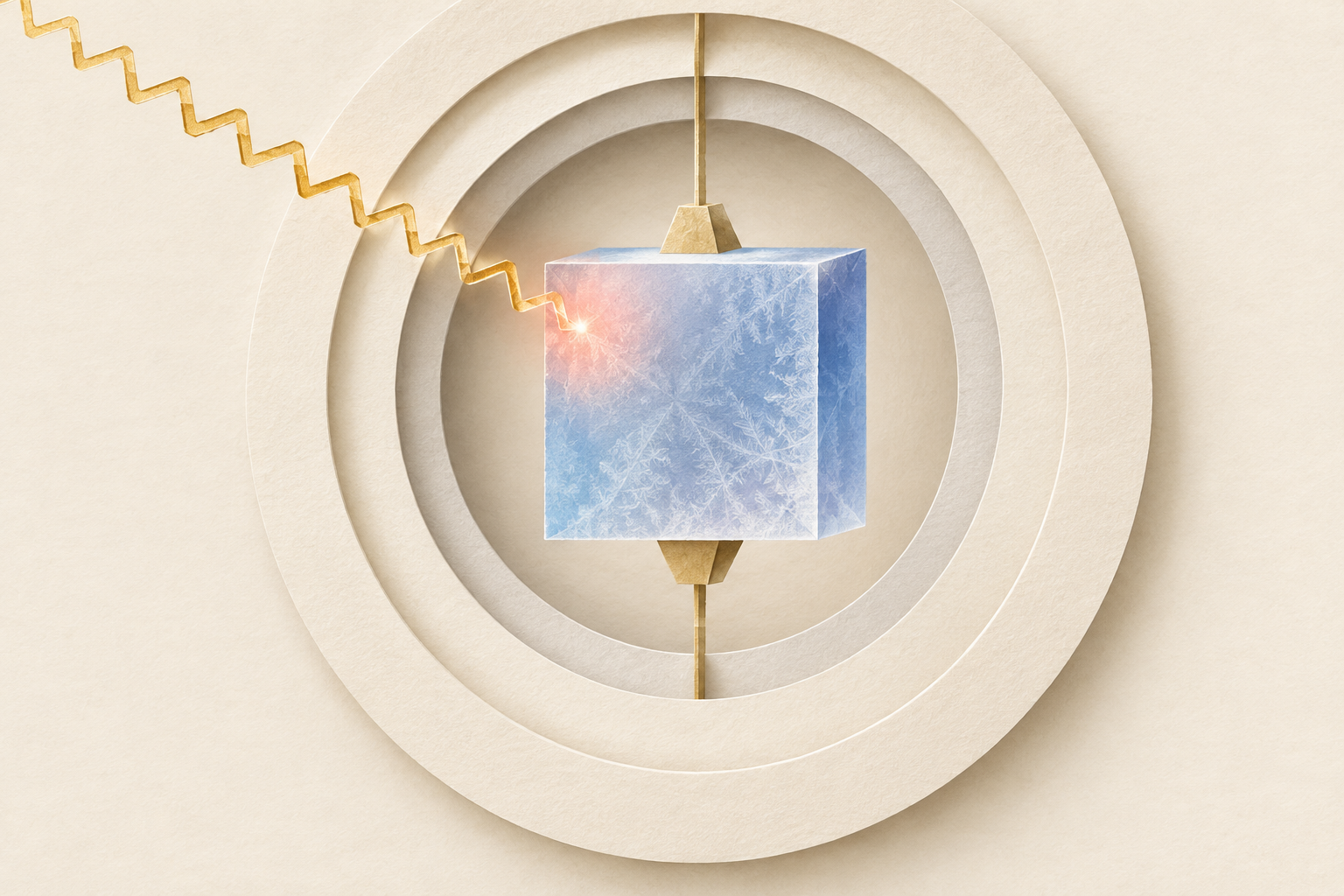
An atomic clock does not count tiny mechanical swings inside an atom. It counts cycles of electromagnetic radiation tuned to an atomic transition. The atoms help identify the right frequency—the number of cycles each second. NIST’s explanation connects those two jobs: finding a reliable beat and counting it. [1]
- Tune a repeating signal
- Check the atoms’ response
- Count the matched cycles
Atoms tell the clock when it is close
Atoms absorb energy at particular resonant frequencies. By adjusting the radiation and measuring the atoms’ response, a clock can find that resonance. The repeating wave then supplies the ticks. NIST’s guide describes the absorption measurement as the link between the atomic reference and the counted cycles. [1]
Why that enormous number appears
The international definition ties one second to 9,192,631,770 periods of radiation corresponding to a specified transition in an unperturbed caesium-133 atom. “Unperturbed” matters: the definition names an ideal reference condition. The number is part of the definition, not a claim that every clock measures time perfectly. [2]
Picture a reference and a counter
A hypothetical teaching model: one part checks whether a repeating signal has the right rhythm; another counts the repetitions. It is an analogy for the division of work, not a construction plan. Our takeaway is that the reference and the readout answer different questions: how long is a tick, and how many have passed?
Go a little deeper
Optional reading · about 1 more minute
Better clocks and a shared second
BIPM’s explanation of a proposed future redefinition says some optical frequency standards outperform the best caesium realizations. A better instrument and a changed international definition are separate milestones. The current unit page still gives the caesium definition; this article does not announce a new second. [3] [2]
Where the quantum part enters
The relevant quantum feature here is the atom’s specific energy transition. NIST also explains that real clock accuracy depends on the apparatus used to probe it. This is quantum physics used for measurement; understanding it does not require treating the clock as a quantum computer. [1]
Original sources
Attributed synthesis, not original reporting. Examples labeled hypothetical or illustrative are explanatory. Reviewing a source does not independently validate its findings.
- NIST: How Do Atomic Clocks Work? ↗
Created August 22, 2024, updated August 21, 2026. Mechanism and apparatus explanation reviewed September 15.
- BIPM: SI base unit, second ↗
Current unit definition opened September 15, 2026; no publication date established.
- BIPM: Frequently Asked Questions concerning the Redefinition of the Second ↗
Why redefine and proposed process reviewed September 15, 2026. Proposal is not a completed change; no fixed implementation forecast used.