THE MACHINE THRESHOLD
The Machine Threshold. Technology. Possibility. Consequence. A glowing doorway into a mountain landscape.

Big ideas, everyday questions. Explore science, technology and the lives they touch.

THE BIG QUESTION / QUANTUM

One photon can help check whether another was counted

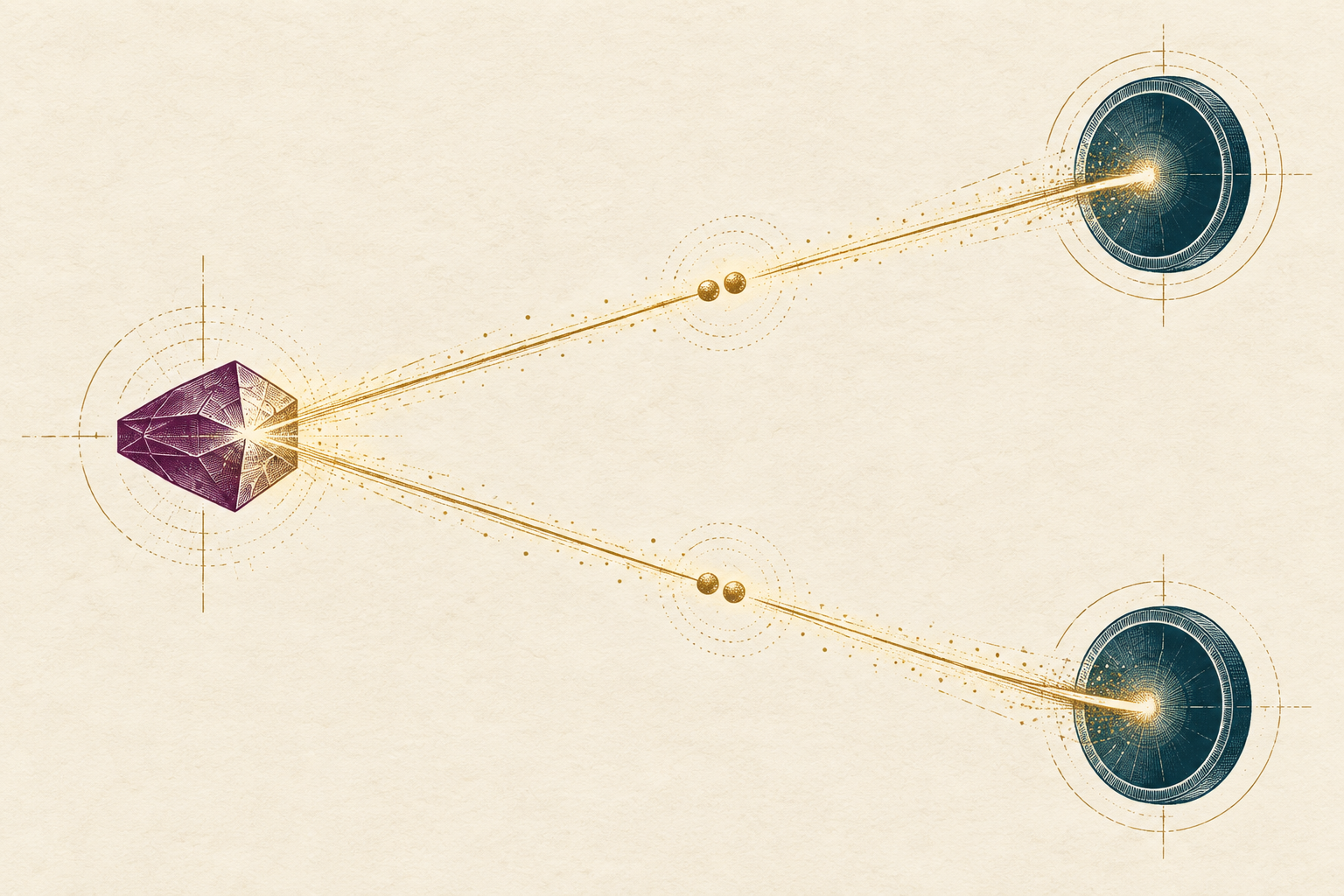
Paired light provides a reference for testing a detector. The useful evidence is the relationship between two counts, not brightness alone.

Read the 2-minute explainer →

Quantum · Counting with a partner

Concept engraving of a plum crystal and two gold light paths ending at teal detector apertures.
AI-generated conceptual paired-light arrangement, not a photograph or apparatus diagram. Dots and rays symbolize light; their size and spacing are not data.

THE THRESHOLD BRIEF / 2026-10-06

One photon can help check whether another was counted

Four explainers about checking the right thing: paired counts, model interfaces, returned robot evidence and file audiences. Original source dates remain visible.

What changed in this edition?

Four new October 6 explainers; one original concept illustration and three explanatory diagrams. September 11 quiz retained.

Reality CheckCan you spot fact from hype? 5 questions · about 90 secondsTake the quizClose

Round: 2026-09-11 · No timer · No signup

Choose the answer that holds up. We’ll explain each one.

Loading the challenge…

Read the questions and sourced answers
  1. The ILO’s 2025 study estimated that one in four workers had some generative-AI exposure. What does “exposure” mean here?

    Some tasks in their occupation could be affected. The study estimates potential exposure of tasks. It does not count job losses or actual adoption. The authors expect job transformation to be more common than full replacement.

    ILO Working Paper 140: Generative AI and Jobs ↗ · Read the explainer
  2. Why could someone keep an encrypted file they cannot read today?

    A future capability might decrypt it while the secret still matters. NIST describes collecting encrypted material for a possible future attack. That does not mean every saved file will become readable, or that such a computer has an arrival date.

    NIST: What is post-quantum cryptography? ↗ · Read the explainer
  3. What can the FDA’s AI-enabled device list tell you?

    Which identified devices have U.S. marketing authorization. It identifies authorized devices and links to public records. FDA says the list is not comprehensive; a listing does not settle an individual care decision.

    FDA: Artificial Intelligence-Enabled Medical Devices ↗ · Read the explainer
  4. An AI answer sounds confident and includes a citation. What is the safest conclusion from that alone?

    The answer still needs checking against the source. NIST identifies false or misleading output that can appear credible. Confidence alone proves neither truth nor falsehood. Check whether the source supports the actual claim.

    NIST: Generative AI Profile ↗ · Read the explainer
  5. NIST finalized three post-quantum cryptography standards in August 2024. What did that announcement mean?

    Organizations could begin implementing the standardized methods. The announcement made standards available and urged organizations to transition. Publishing a standard is different from deploying it across products and systems.

    NIST: First three finalized standards ↗ · Read the explainer

Edition shown above. If a new round isn’t ready, the reviewed edition stays here. Your answers are not sent to us.

IN THIS EDITION

Today’s reading

Four new explainers in this edition. Choose a subject and read the complete story.

Concept engraving of a plum crystal and two gold light paths ending at teal detector apertures.AI-generated concept illustrationLight & measurement · 2 MIN READ · EXPLAINER

One photon can help check whether another was counted

Paired light provides a reference for testing a detector. The useful evidence is the relationship between two counts, not brightness alone.

Read the story →
A fixed model can expose useful signals
  1. Base model: weights stay fixed
  2. Intermediate signal: feeds the side network
  3. Trained correction: steers the next step
Research interface; a final-image-only API is different
AI images & control · 2 MIN READ · EXPLAINER

An image model can learn a new steering layer

Diffusion Controller adds a trained correction while leaving a base model fixed. It still needs access to intermediate generation signals.

Read the story →
A plan and its confirmation are different
  1. Before: review and simulate the commands
  2. During: the rover executes out of sight
  3. After: inspect returned images and data
Historical JPL workflow; no current mission status shown
Robots & evidence · 2 MIN READ · EXPLAINER

Sending a rover a plan is not confirmation that it drove

Mars rover operations separate a reviewed command sequence from the images and data returned after execution.

Read the story →
Two separate sharing decisions
  1. Audience: who can open the file?
  2. Role: what can that person do?
  3. Boundary: visible content can be passed on
Viewer is a role, not a named-recipient restriction
Everyday privacy & sharing · 2 MIN READ · EXPLAINER

A view-only file link can still have a wide audience

Who may open a file and what they may do are separate settings. Google Drive makes both choices visible in its sharing controls.

Read the story →

Browse earlier stories in the archive →

Search the full article & source library

Search articles & sources.

Source-linked reading

Managing AI risk across the system lifecycle

NIST’s voluntary framework offers a shared foundation for evaluating trustworthiness and managing AI risks.

Read the original at NIST ↗

Curiosity, with sources.

The Machine Threshold connects advances with their practical consequences and unresolved questions. Read complete explanations here, then follow the original sources when you want to investigate further.

Current edition sources checked 2026-10-06 · archive articles retain their own review dates

Meet the publication and see our standards →

Follow the next edition →