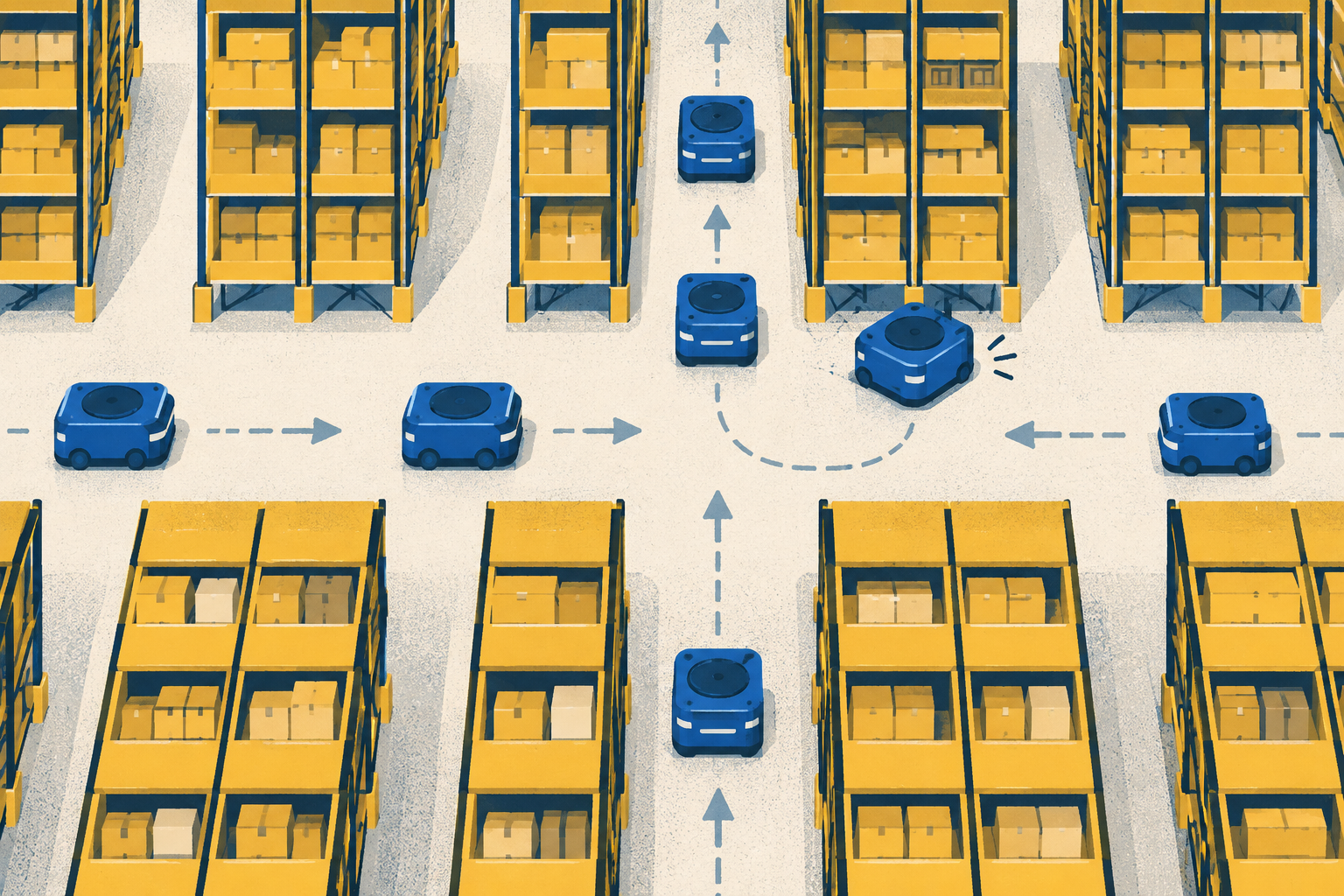
The goals still come from people
In a July 2026 Earth field test, NASA’s ASTRA project and partners tried a three-robot team guided by human science goals. The software considered potential scientific value, available robots and risk when choosing what to investigate. NASA described the test on September 15; this was not a mission on another planet. [1]
Different robots answer different questions
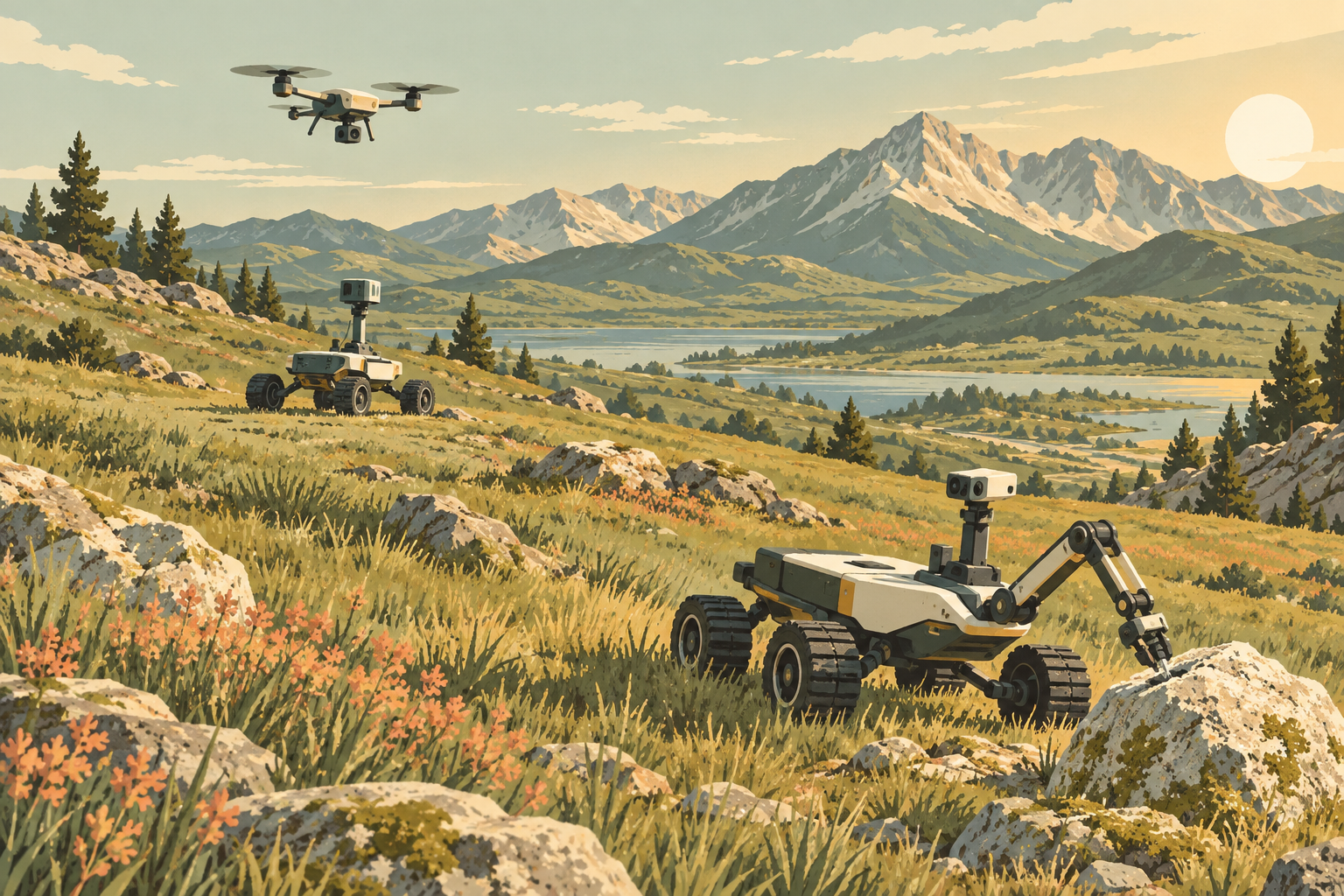
A drone scouted from above. One rover used lidar to map the surroundings, while another carried an arm for collecting samples. The experiment explored how the fleet could reconsider its plan as observations arrived, while reporting to human managers. [1]
A discovery need not erase the plan
NASA reports that when the drone noticed another area of interest, the fleet could bring another robot into that investigation without simply abandoning the original objective. The report is an institutional account, not an independent reliability study or a published success-rate benchmark. [1]
Try the choice yourself
Hypothetical example: A team is mapping a safe valley when its drone notices an unusual rock beside a steep slope. “Interesting” is not enough to decide. Would a photograph answer the question? Is sampling worth the risk? Can another rover continue the original survey? The useful decision depends on the mission’s priorities, not just on detecting something new.
Go a little deeper
Optional reading · about 1 more minute
Science value is part of the instruction
Our interpretation: Giving a system a destination is different from telling it how to choose between discoveries. A reviewer should ask who defined scientific value and acceptable risk, how those choices can be inspected, and when a person must resolve uncertainty. More autonomy makes those questions more important, not less.
Keep the demonstration separate from the destination
NASA describes future use where distance prevents real-time human instructions or exploration is hazardous. Those applications motivate the work; they are not deployments established by this field report. [1]
Original sources
Attributed synthesis, not original reporting. Examples labeled hypothetical or illustrative are explanatory. Reviewing a source does not independently validate its findings.
- NASA: Field-Tests AI Fleet Capability for Science, Exploration ↗
September 15, 2026 report about July testing in Virginia; page updated September 17. Full report and captions read September 18. Agency account, no independent quantitative validation.