From magnetic field to light
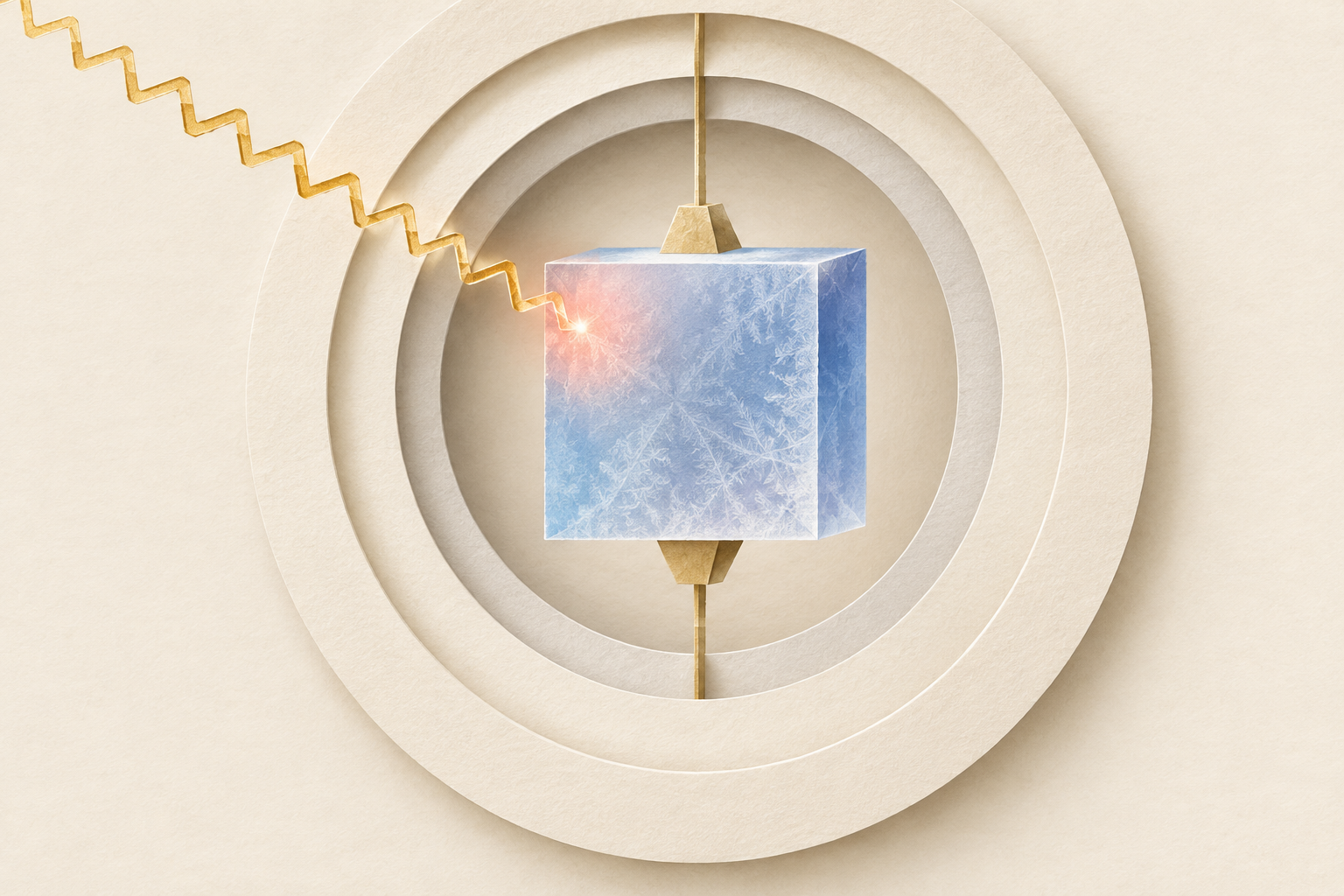
NIST describes a nitrogen-vacancy center as a useful defect in diamond. Light prepares its quantum spin state, magnetic fields affect that state, and emitted photons provide a way to read the result. This is a sensing process, not a general-purpose quantum computer. [1]
- Prepare: light sets the spin state
- Sense: a magnetic field affects the spin
- Read: count detected photons over repeats
Why a single run is not enough
The project’s measurement-methods discussion says conventional readout emits very few photons before the spin resets, and only a fraction are detected. Repeating the experiment helps build a useful measurement. The page also describes spin-to-charge conversion as a way to carry spin information into a charge state that can be read with more photons. [1]
Turning clicks into tracking
A February 2019 paper’s abstract describes a differential photon-rate detector and feedback that adjusts the microwave excitation frequency to track a magnetic resonance. The important distinction is between collecting individual detection events and processing them into a continuously tracked signal. This explainer uses the abstract only and does not assess the reported sensitivity. [2]
Go a little deeper
Optional reading · about 1 more minute
Which part of the measurement improved?
Our interpretation: When a sensor announcement says it is more sensitive, ask whether the change came from the sensing material, the readout, or the way measurements were chosen and combined. A better detector and a better analysis method can address different bottlenecks.
The date belongs to the evidence
NIST’s project page was created in 2019, updated in March 2025 and is marked completed. Its descriptions explain an established research approach; they are not evidence of a new September 2026 instrument. [1]
Original sources
Attributed synthesis, not original reporting. Examples labeled hypothetical or illustrative are explanatory. Reviewing a source does not independently validate its findings.
- NIST: diamond NV center magnetometry ↗
Created October 3, 2019; updated March 26, 2025; completed status, description and Measurement Methods read September 28. No sensitivity numbers adopted.
- Ambal and McMichael: differential rate meter ↗
February 12, 2019 publication listing and abstract read September 28. Full journal paper not reviewed; mechanism summary only.