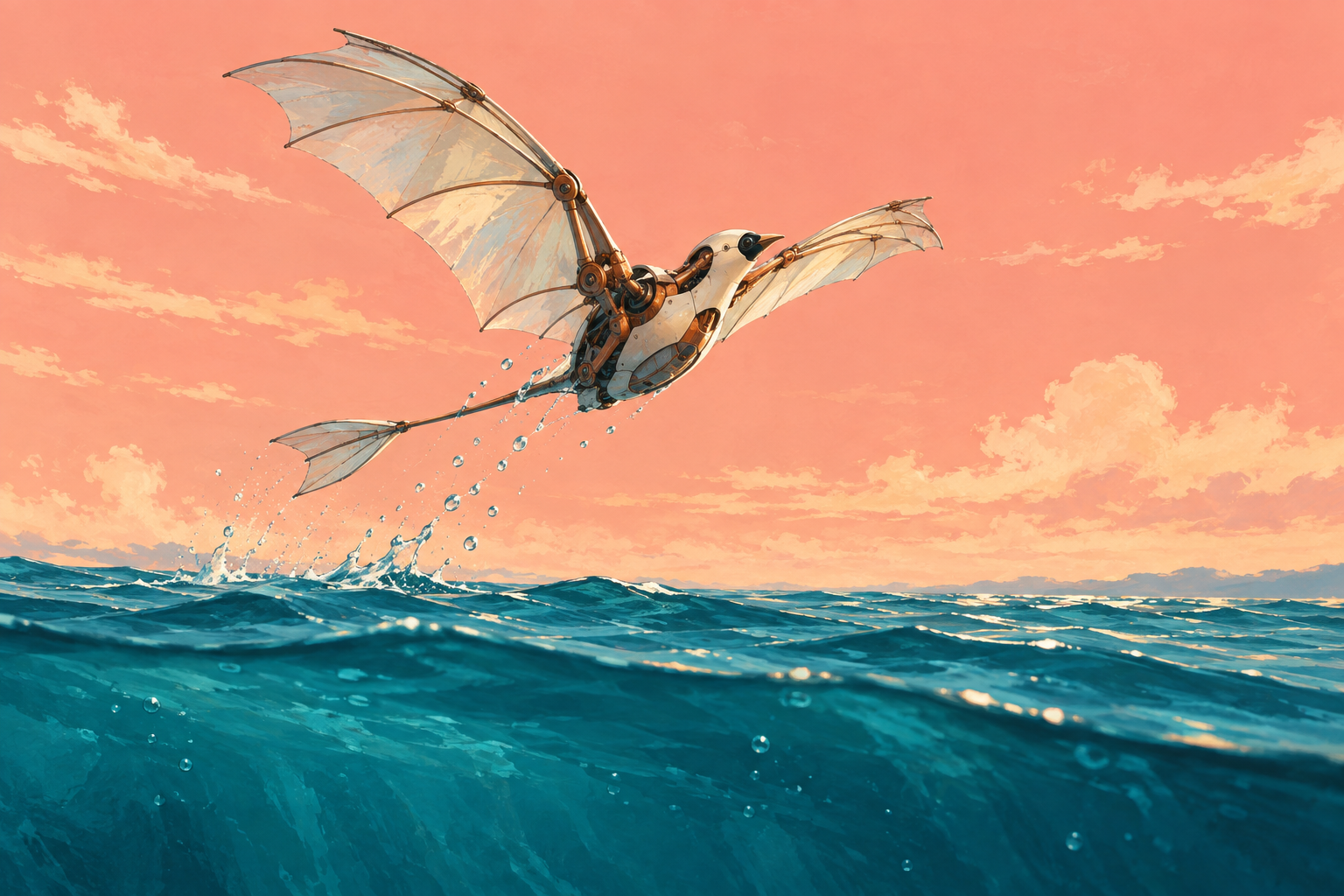
The surface is part of the machine
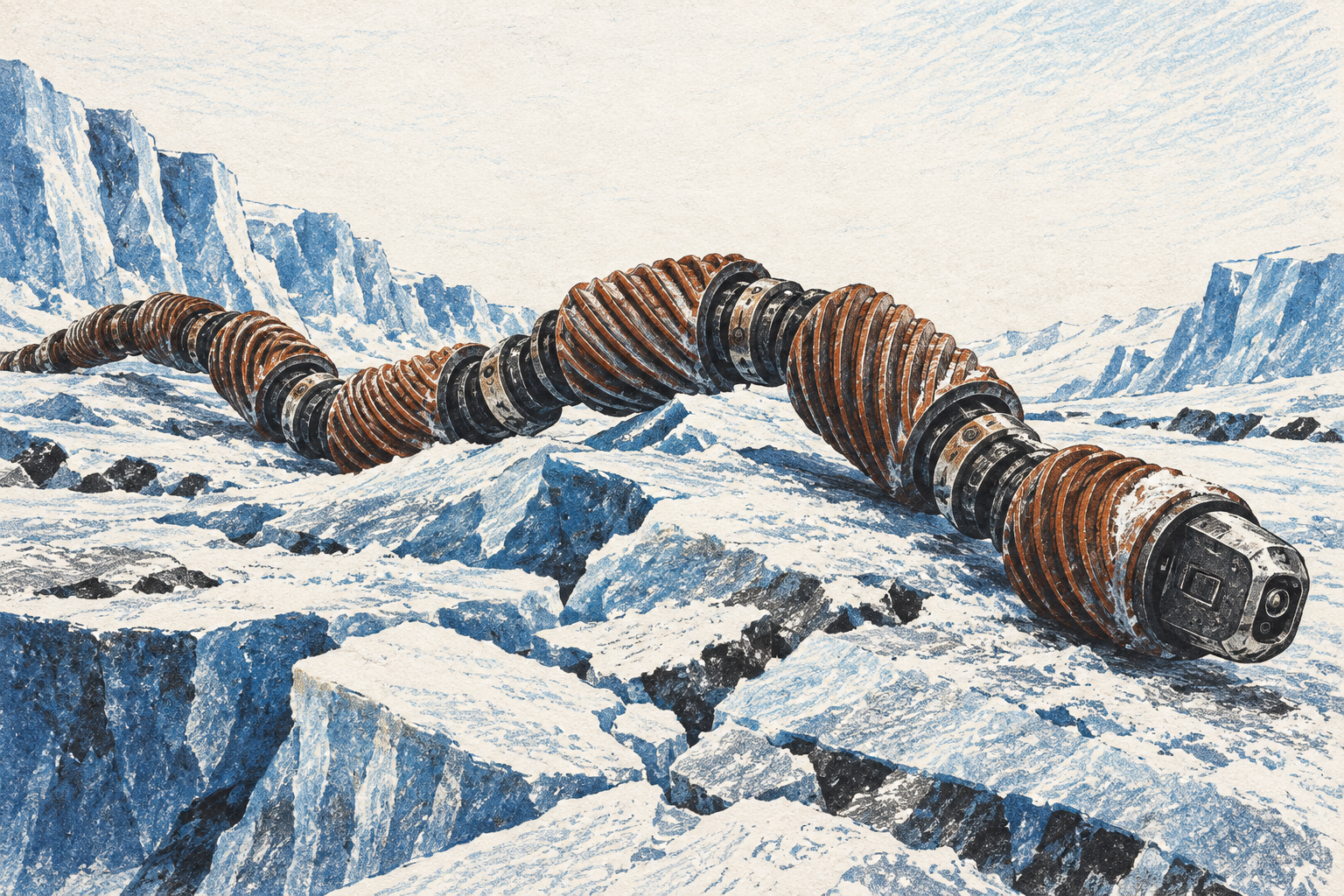
EELS, JPL’s experimental snake-like robot, uses powered screw surfaces for grip and propulsion. Its articulated body can change shape. The project remains in development; icy moons are potential destinations, not places this robot has explored. [1]
An ice rink was not enough
A 2024 report describes September 2023 tests on Canada’s Athabasca Glacier. Metal screws that had worked on rink ice left the body caught on porous glacier terrain. Longer plastic screws improved traction but offered poor sideways control. Maintaining contact across uneven ground was another constraint. [2]
Movement, with limits
The team demonstrated surface travel, but some obstacle trials needed manual intervention. A separate vertical prototype held itself between icy walls and descended roughly 1.5 metres. Those are distinct tests, not a continuous autonomous journey into an alien ocean. The report describes preliminary field results. [2]
Go a little deeper
Optional reading · about 1 more minute
What this changes about a demonstration
Our interpretation: Watch the contact, not just the motion. A moving robot can demonstrate a promising mechanism while leaving unanswered whether it can steer, recover and keep moving when the surface changes.
A useful comparison
Hypothetical example: Imagine testing a snow boot on packed snow, loose powder and wet ice. One successful crossing does not settle all three. The robot’s changing contact conditions invite the same question: which surface was actually tested?
Original sources
Attributed synthesis, not original reporting. Examples labeled hypothetical or illustrative are explanatory. Reviewing a source does not independently validate its findings.
- JPL: EELS project overview ↗
Official overview checked September 24, 2026; In Development status, active-skin locomotion and historical test captions. No current mission approval claimed.
- Paton and colleagues: 2023 EELS Field Tests at Athabasca Glacier ↗
2024 report of September 2023 tests; abstract and surface/vertical test results read September 24, 2026. Team report, not independent replication.