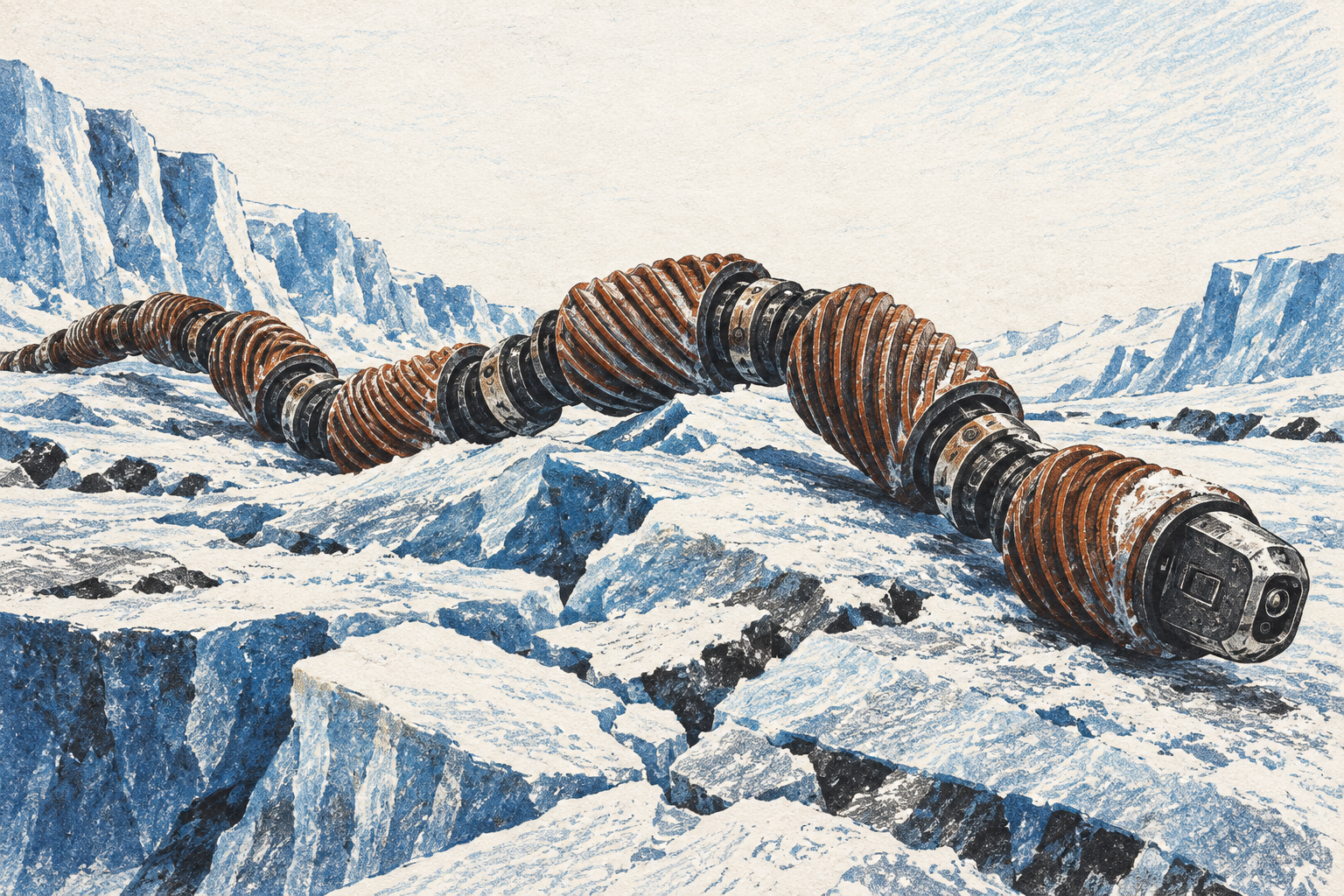
The suspension becomes part of the movement
In a June 18, 2026 report, JPL describes ERNEST, a four-wheeled research rover with powered suspension joints. It can redistribute weight and use movements such as wheel-walking to negotiate obstacles. A clutch lets it switch to a more energy-efficient passive mode. These are Earth tests for possible future missions. [1]
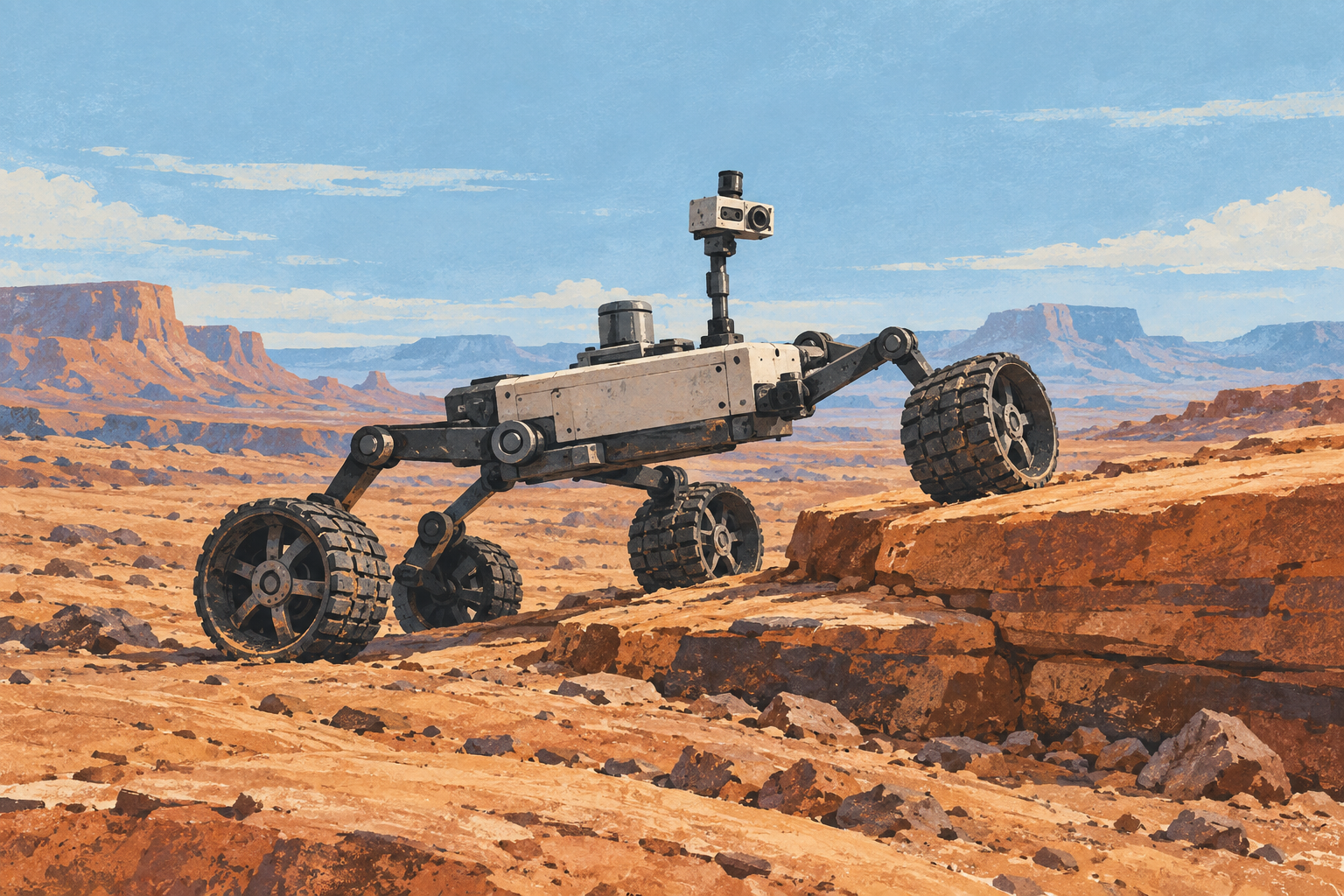
Learning from a physical machine
Engineers supplied a simulator with measurements of the real rover on different terrain. They then used reinforcement learning—training through interaction—to develop control behavior. JPL reports subsequent autonomous obstacle-course tests involving sand ripples, rubble, steps and slopes. [1]
An obstacle course is one part of the journey
The same report describes a March 2026 desert campaign and says work was beginning to combine active-suspension decisions with longer-range navigation. Choosing how to cross a step and deciding whether to approach it are related capabilities, but the report does not establish a completed lunar mission. [1]
Go a little deeper
Optional reading · about 1 more minute
Two questions for a demonstration
Our interpretation: Ask both “what movement did the machine execute?” and “who chose the destination?” A compelling climb answers the first question more directly than the second. This distinction helps explain why an engineering team can demonstrate locomotion while still developing route planning.
A choice before the obstacle
Hypothetical example: A low ridge lies beside a longer clear path. A rover designer might compare the cost of an active climbing gait with the cost of driving around. The illustration shows the mechanical idea; it is not a measurement of ERNEST’s energy use or an exact suspension drawing.
Original sources
Attributed synthesis, not original reporting. Examples labeled hypothetical or illustrative are explanatory. Reviewing a source does not independently validate its findings.
- JPL: testing advanced rover capabilities ↗
June 18, 2026 team report; March field campaign, active/passive suspension, simulation and remaining integration read September 26. No independent replication.