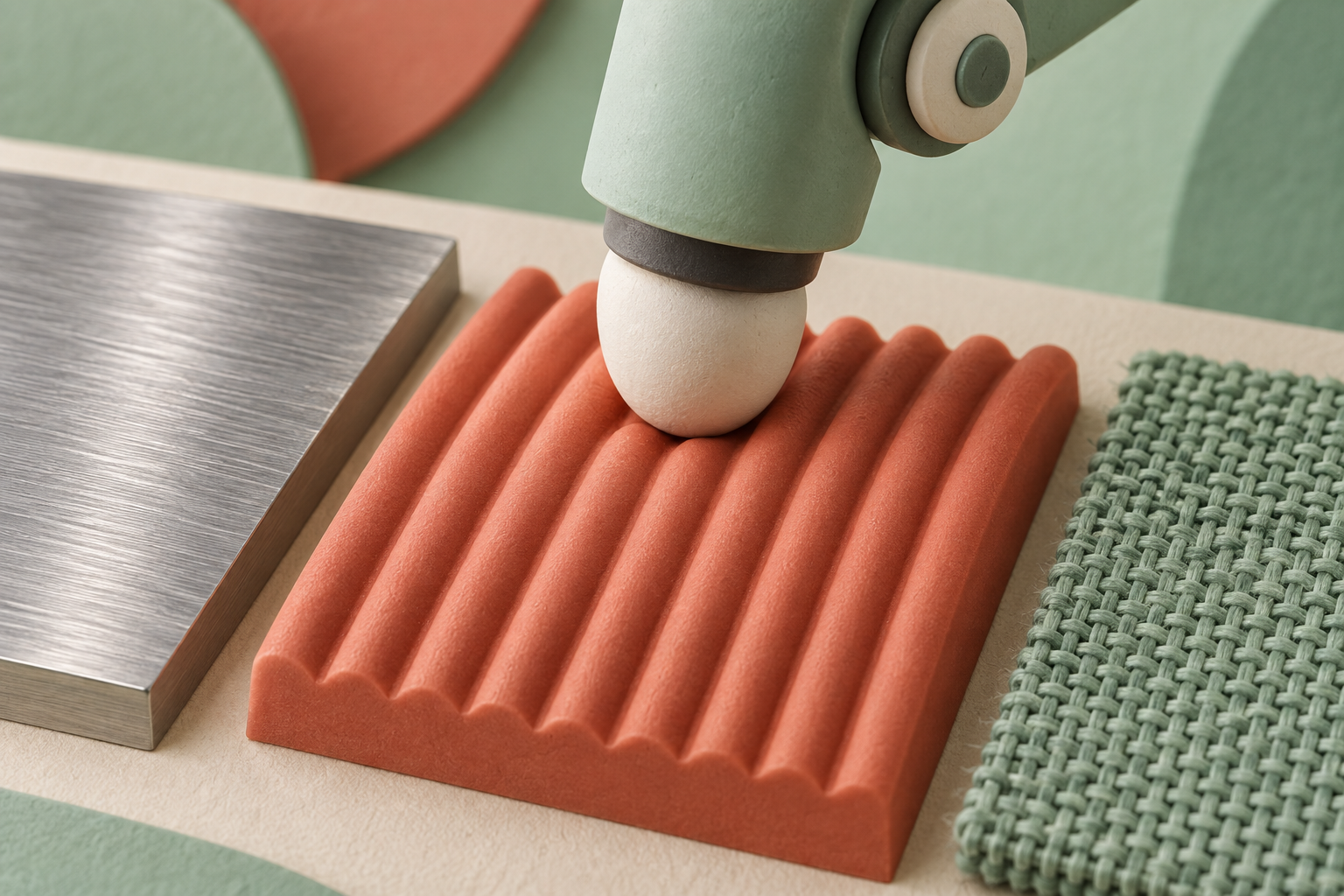
Look at the result, not just the position
Putting a lens in roughly the right place is only the start. In a March 2026 preprint, researchers describe a robot that observes the light after placement, then moves or tunes components until the measured beam approaches its target. That feedback connects a mechanical action with the optical result. [1]
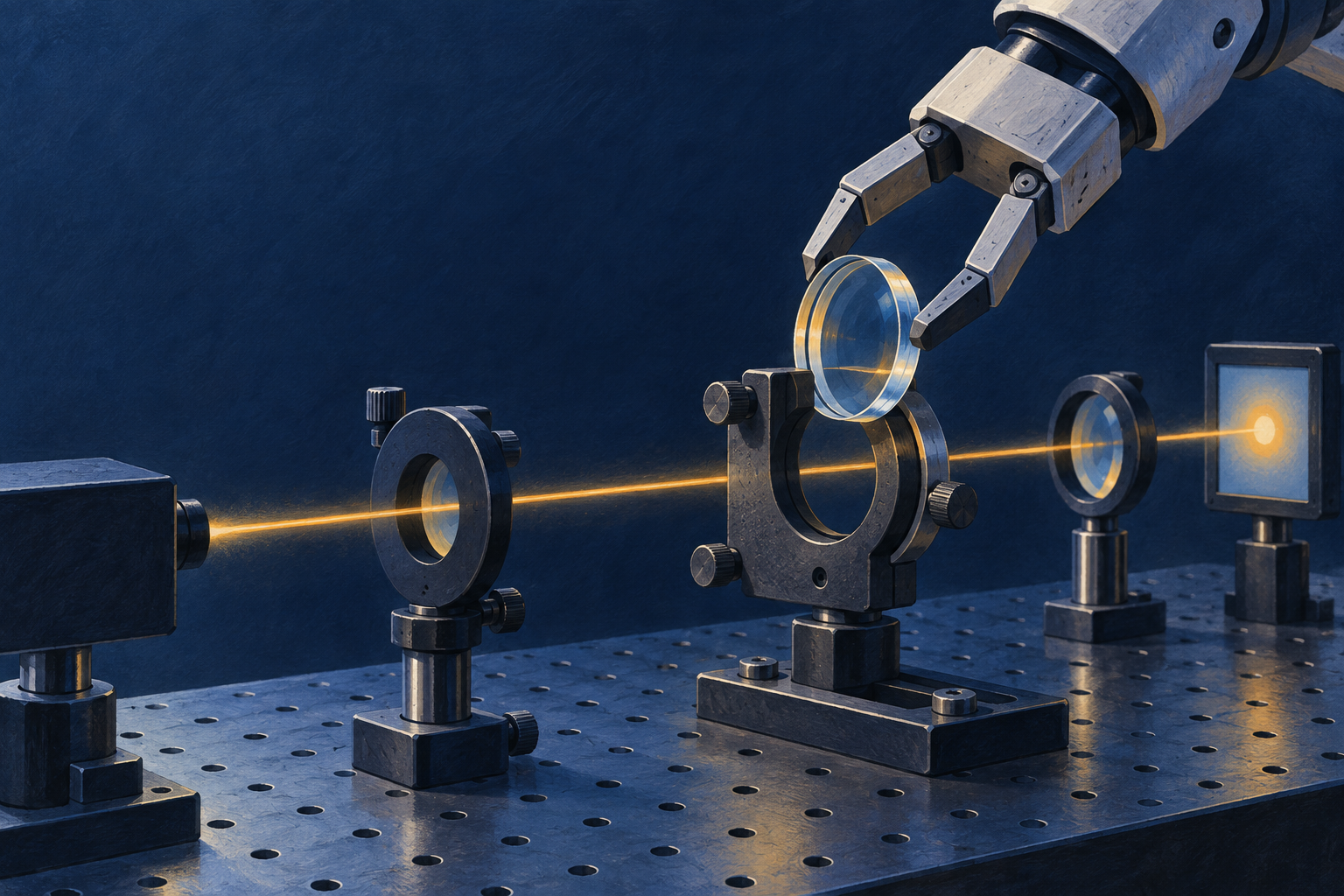
Give the robot a workable bench
The system uses cameras, a robotic arm and optical components held in custom marked housings with magnetic bases. A motorized tool turns adjustment knobs. A person supplies the experimental layout; the robot carries out the assembly and alignment sequence. This is structured laboratory automation, not a robot inventing an experiment from an empty room. [1]
Build it, then recover the alignment
The authors demonstrate a functioning tabletop laser cavity and recovery from deliberately introduced misalignment. Their paper distinguishes approximate camera-guided placement from finer adjustments driven by the optical signal. The particular apparatus and tests define what was demonstrated; they do not establish reliable operation for every optical experiment. [1]
Why this could be useful
MIT’s September 17 account describes a longer-term aim of remotely accessible robotic optics laboratories. It presents remote cloud access as development work and a future ambition. The immediate contribution is the demonstrated assembly-and-tuning system; a universally available laboratory service is not the result being reported. [2]
Go a little deeper
Optional reading · about 1 more minute
A familiar way to think about feedback
Hypothetical analogy: When you adjust a projector, placing it on the table is not enough. You look at the image, change the angle or focus, and look again. This analogy explains the action–measurement loop, not the precision or complexity of the research apparatus.
What to ask about the next demonstration
Our interpretation: Look for tests with unfamiliar layouts, a wider variety of components and disturbances the system was not tuned around. A useful next question is how often the machine recognizes that it cannot recover and asks a person for help. Those would strengthen the case for routine laboratory use.
Original sources
Attributed synthesis, not original reporting. Examples labeled hypothetical or illustrative are explanatory. Reviewing a source does not independently validate its findings.
- Author preprint: robotic assembly, alignment and self-recovery of optical systems ↗
March 23, 2026 version. Methods IV and results V read September 18; controlled apparatus and induced perturbations, not independent replication.
- MIT News: robotic optics laboratory ↗
September 17, 2026 institutional report, read September 18. Auto-tuned optics and future cloud-lab discussion; same research team, not independent validation.