Keep the new touch out of the lessons
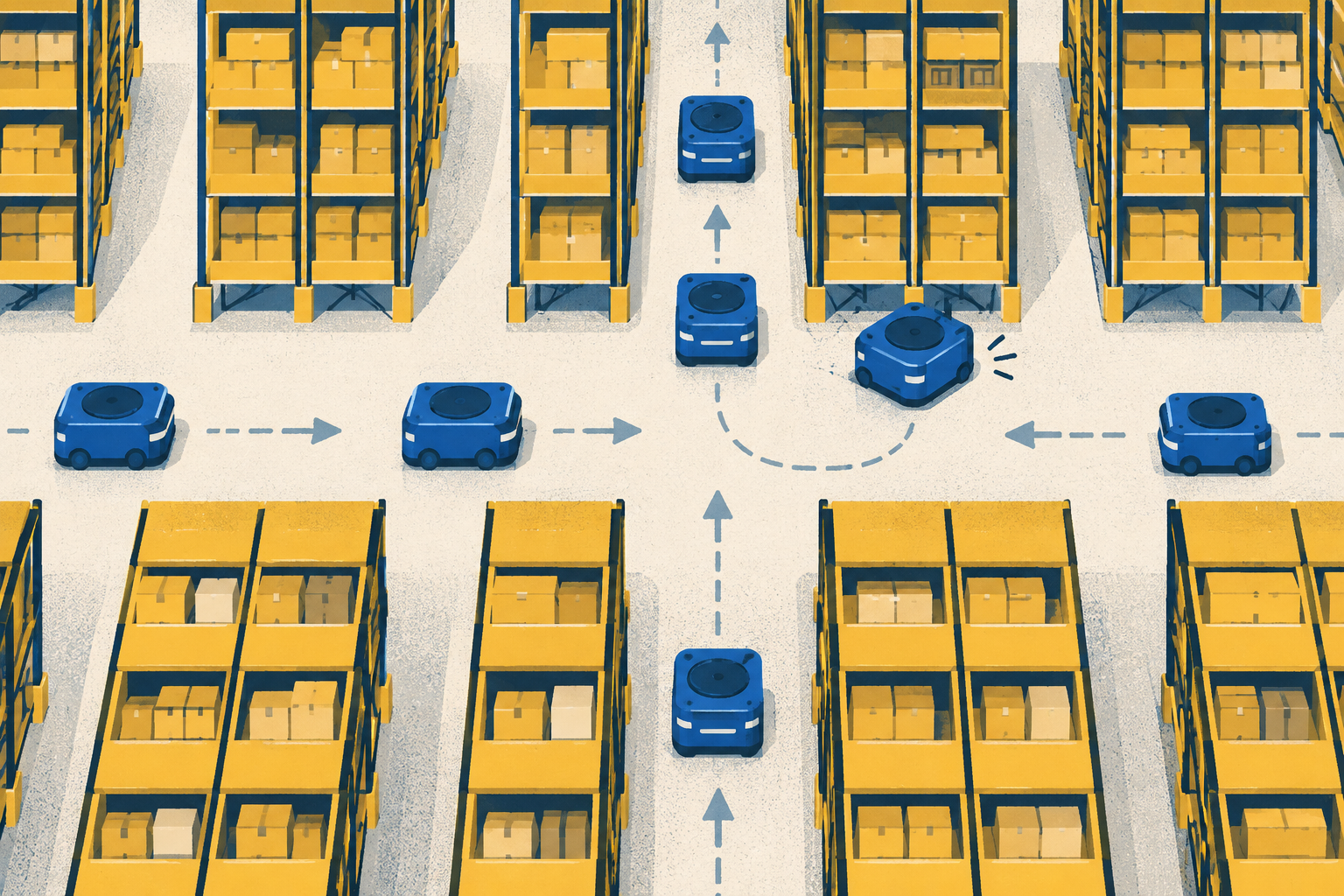
A June 30, 2026 preprint by Jingbo He, Michael Färber and Roberto Calandra argues that a robot-touch test should separate entire presses—and, for a different question, entire materials—from training. Neighboring sensor frames within one press can be very similar. Mixing those frames between training and testing can make the test easier than encountering something new. [1]
A dataset organized around contact
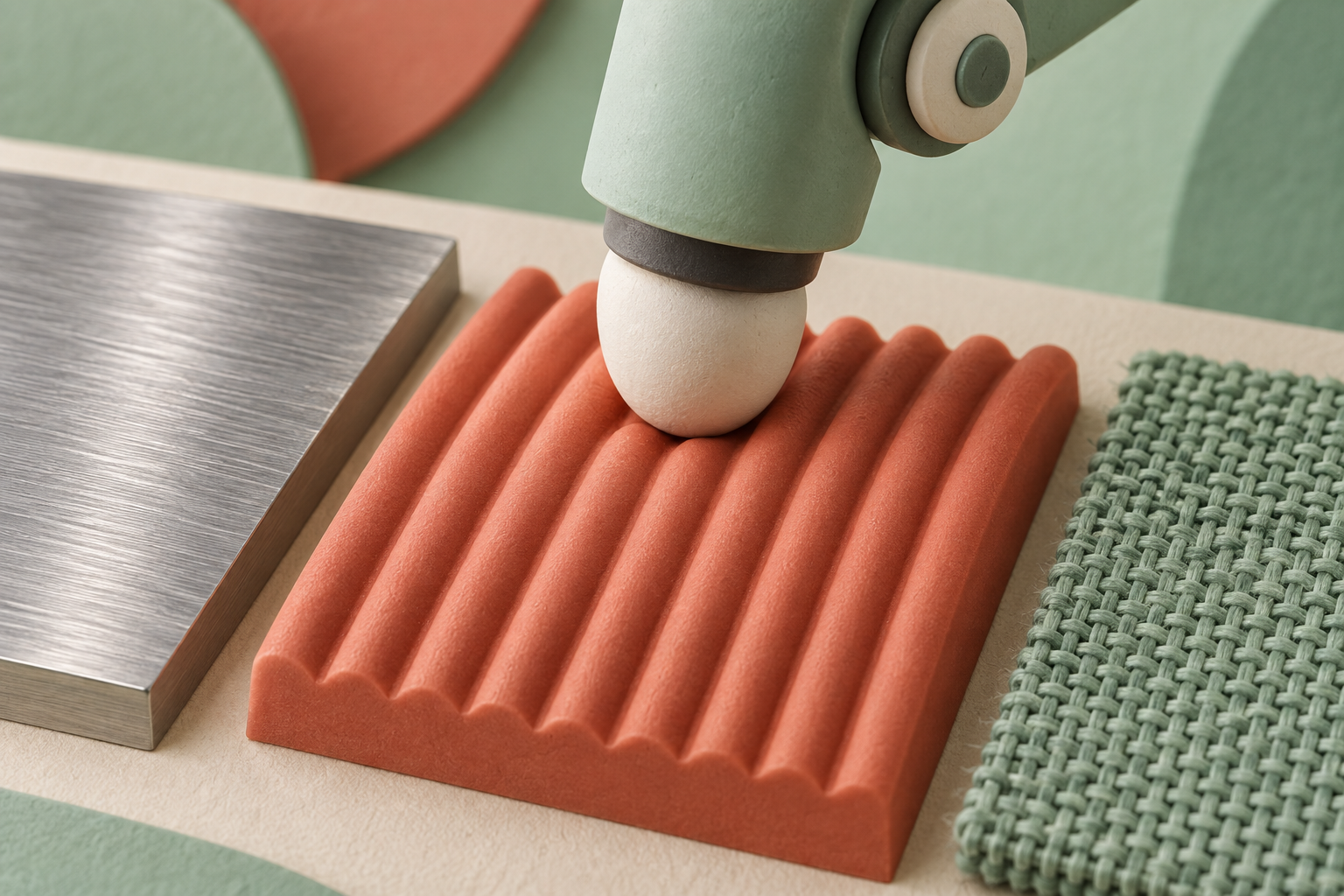
Their RCT project records robot presses on 122 reference materials using three DIGIT tactile sensors. It retains the sequence belonging to each press, with material, sensor and position information. The project page identifies the work as a preprint under review. Its purpose is controlled evaluation, not a claim that robots have mastered arbitrary household objects. [2]
Think of a fabric sample
Hypothetical example: Imagine teaching a robot with several readings as it presses one square of cloth. A test using the next reading from that same press asks a narrower question than a test using a new cloth sample. Holding back all readings from the new material is a way to ask the harder question. This example illustrates the study design; it is not a reported experiment.
What this experiment does not cover
The paper limits its conclusions to controlled material presses. It does not cover arbitrary object shapes, curved surfaces or dynamic exploratory movements. The authors also report difficulty with a simple hard-versus-soft prediction task. We have not replicated their experiments, and do not use this preprint to rank commercial robots. [1]
Go a little deeper
Optional reading · about 1 more minute
A score needs a description of the exam
Our interpretation: Our takeaway is to ask what was unfamiliar at test time: the individual reading, the whole press, the material, the sensor or the contact location. Those labels describe different questions. A number without that explanation leaves a reader unable to tell which kind of learning was tested.
Why a harder test can be progress
Our interpretation: A less flattering test can still be useful if it reveals a specific gap worth solving. For a future household helper, we would want evidence about unfamiliar objects and real tasks as well as material recognition. This study helps frame a test; it does not establish that household capability.
Original sources
Attributed synthesis, not original reporting. Examples labeled hypothetical or illustrative are explanatory. Reviewing a source does not independently validate its findings.
- He, Färber and Calandra: RCT tactile-generalization preprint ↗
June 30, 2026 preprint. Introduction, dataset, evaluation protocol and limitations reviewed September 17; no peer-reviewed status or independently reproduced performance asserted.
- RCT author project page ↗
Dataset overview, metadata and preprint status read September 17, 2026. Author-maintained account; not independent corroboration. No dataset assets reused.