
The antenna reaches farther than the legs
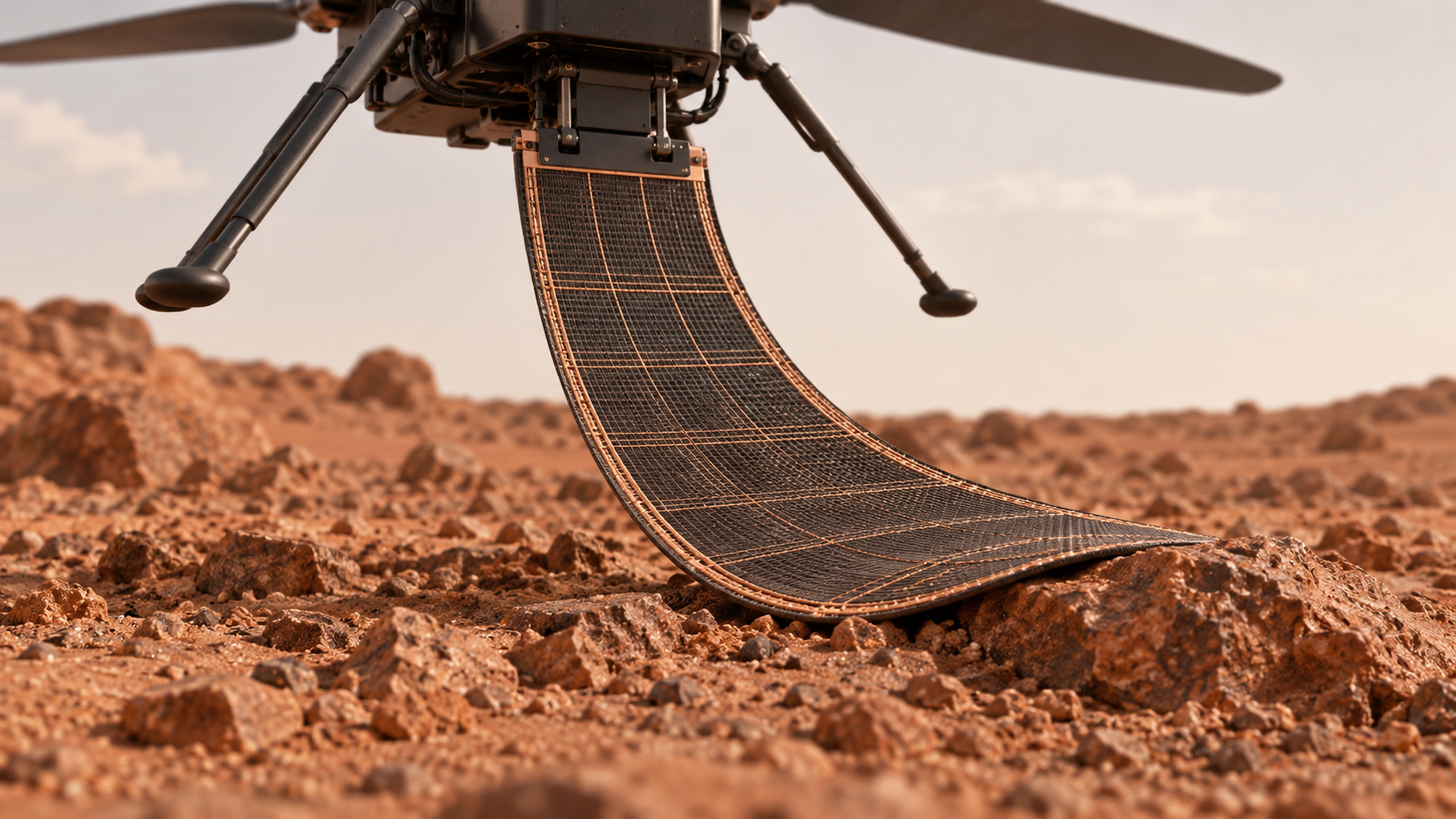
A radar antenna can need more room than a small aircraft has underneath it. JPL’s August 2026 report describes a flexible fabric antenna for the planned SkyFall Mars helicopters. It extends below the landing gear, so it must bend on contact with the ground and return to its working shape after takeoff. [1]
Bending is only half the test
The team combined flexible protective layers with springs that help the antenna recover its shape. During Earth testing, engineers applied temperature changes and repeated bending, then checked its radio performance. A part that stays physically intact must still transmit and receive correctly. [1]
The mission is still ahead
NASA describes SkyFall as a planned three-helicopter mission to investigate shallow subsurface ice and scout the surface. Its mission page lists a late-2028 launch. Those are mission plans; the antenna tests did not find ice on Mars. [2]
What the test leaves open
JPL says further work includes vibration tests and trials of an engineering model. Its report is evidence about a component test campaign, not a completed flight qualification or a successful Mars mission. [1]
Go a little deeper
Optional reading · about 1 more minute
A useful design question
Hypothetical comparison: Imagine a tool that works when extended but must fold away whenever its carrier stops. Making it rigidly stronger could make the contact problem worse. The design question is whether it can change shape when needed and then recover the shape that makes it useful.
What to watch next
Our interpretation: The revealing follow-up is a combined test: mechanical disturbances, repeated deployment and signal quality on the same hardware. Separate successful tests help, but the whole assembly must eventually work together. Keep the mission schedule separate from that engineering evidence.
Original sources
Attributed synthesis, not original reporting. Examples labeled hypothetical or illustrative are explanatory. Reviewing a source does not independently validate its findings.
- JPL: Testing the SkyFall radar antenna ↗
August 6, 2026 report; July Earth demonstration. Design and Testing Vivaldi sections read September 19. Agency account, not independent replication.
- NASA: SkyFall mission ↗
Mission overview and mission table read September 19, 2026; publication date not established. Planned mission and schedule, not completed exploration.